

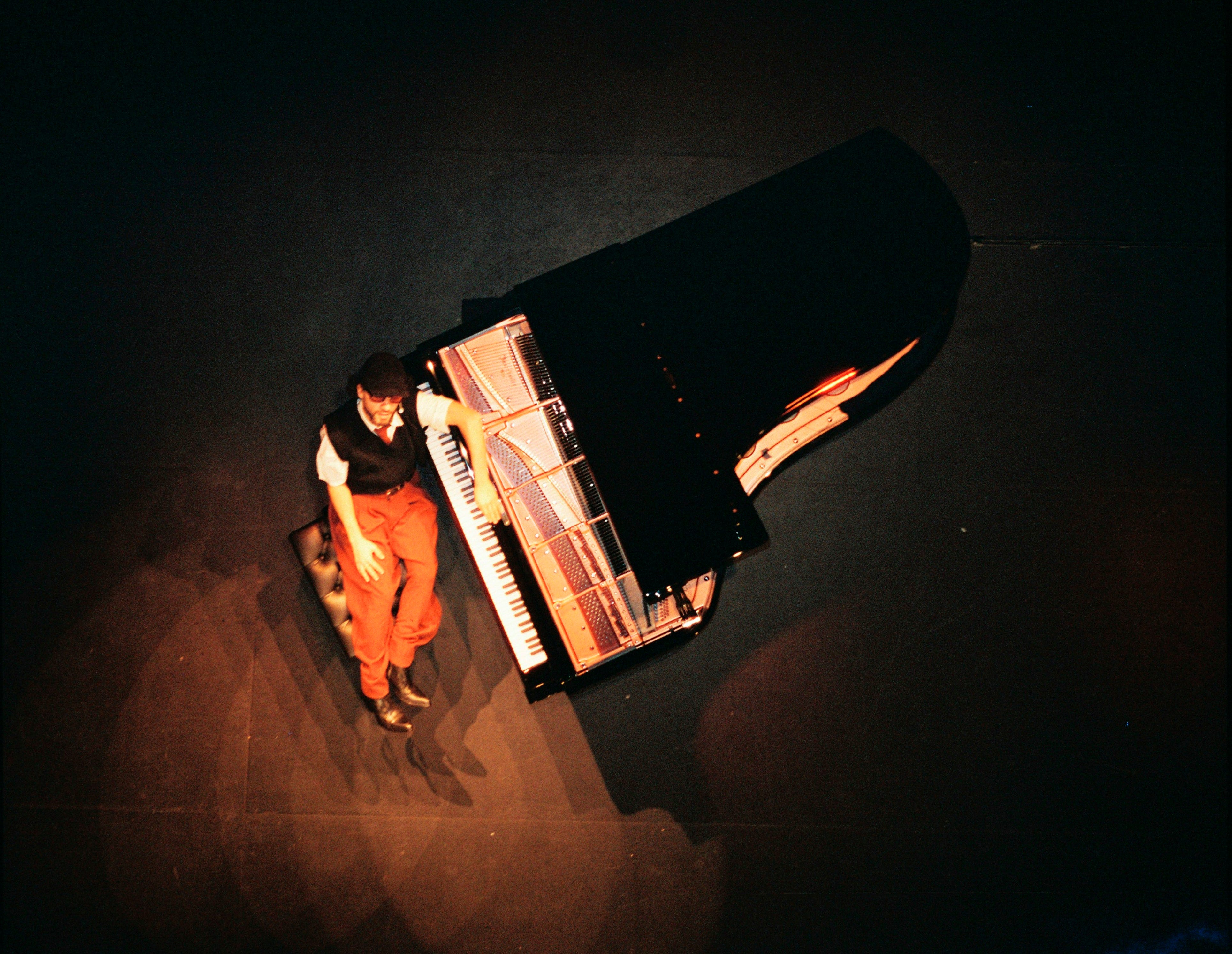
Auditoriums, philharmonic halls and opera houses offer extraordinary acoustics for the piano. Their wood, walls and shapes have been designed to carry voices and instruments naturally. I’ve been lucky enough to perform in these special places for years. I feel at home in them. How do we find that same feeling on the scale of the Stade de France?
Today, technology and the expertise of sound professionals make beautiful sound possible, even in the largest spaces. It comes down to a series of connected choices: the piano, the microphones, the speakers and where we place them. In this letter, I want to share where we are and how we’re approaching this challenge.
The piano
Everything begins with the instrument. Some pianos sound particularly beautiful in a studio, others in a living room or a concert hall. For the stadium, I’ve already made my choice. It’s a rare grand piano, an exceptional instrument made in very small numbers. It has already served me well at festivals. I know it intimately, and we’ve tested it in arenas, parks and on open-air stages. More than once, its consistency has surprised me. Above all, it responds beautifully to amplification.
The microphones
For years, every concert, every setting has taught us something new: the Zénith venues, outdoor festivals, arenas, vast parks, Palais 12, Bercy, the Château de Chantilly, the abbey of Mont-Saint-Michel, beneath the northern lights…
To capture a piano, we combine several types of microphones. Each tells a different part of the instrument’s story. The first sit above the strings, close to the hammers: they capture the attack, the clarity of each note. The second are contact pickups placed beneath the piano, against the soundboard, the large wooden panel that amplifies the strings’ vibrations. They pick up its vibrations directly, bringing body and power to the sound. The last, attached beneath the lid, capture a broader picture of the instrument. My sound engineers balance these sources, one by one, to bring the whole piano back together.
The speakers
The sound then travels to the speakers. In a stadium, they hang in long vertical columns, each aimed at a specific section of the audience. At the moment, I’m visiting specialist manufacturers at their warehouses. I listen to their systems in conditions close to those of a concert, testing them with the pieces I’ll play on April 17. I’m looking for the one that best reproduces the piano’s full range of sound.
Shaping the sound
A sound system designer recreates the stadium in three dimensions. They position every speaker, calculate its angle and predict how the sound will reach each area, before anything is installed.
Two properties of sound guide this work. Sound travels at around three hundred and forty meters per second: a note takes more than half a second to cross two hundred meters. So we install additional speakers further into the stadium, carefully delaying their output to align it with the sound arriving from the main speakers near the stage. Air also absorbs high frequencies as sound travels, to varying degrees depending on temperature and humidity. On the evening of the concert, we’ll measure those conditions and use software to adjust the sound accordingly.
There’s one idea I’m particularly drawn to: placing extra speakers around you. The sound could then move through the stadium, as it does in a cinema. I want to explore a way of placing my music in space, created especially for this concert, so you can feel it all around you.
The sound team
I’m bringing in the best people for every role. One person designs the system. Another tunes it and looks after it throughout the concert. A sound engineer mixes what you hear from a mixing desk in the middle of the audience. On stage, the monitor engineer shapes the sound I hear, giving me the clarity and detail I need to adjust my playing. A piano technician prepares and tunes the instrument especially for that evening. Each has their own team of assistants and technicians. For the sound alone, all these teams are working together.
All this work has a single purpose: to become invisible. On the evening of the concert, the technology will fade away. At times, you may even close your eyes, and all that will remain is the music, shared in that moment by tens of thousands of people around you.
Sincerely,
Sofiane Pamart
✨ Lire cette publication en français ici → Piano Scenes (FR)
That must be crazy overwhelming! May it be the most successful!🙏
That’s sure, it will be a really great concert. It would be nice to hear that. I quite enjoy big concerts every now and then. Love Piano.