

PLANET made me travel. LETTER gave me a way to write to you. NOCHE pulled me into the mysteries of darkness. Three albums where I spoke through the eighty-eight keys of my piano.
Joy, grief, love, adventure, anger, wonder. Every emotion had to find its place inside the possibilities of a single instrument. I learned to paint with its colors, until the day, two years ago, when I felt my ideas spilling beyond the piano.
So I opened a new door, into a world I had never explored. I wanted to hear what my melodies would become if they could breathe through the voices of a symphony orchestra.
It took months to reshape my musical language. Months of studying, listening, learning how each family of instruments speaks to the others. Writing for orchestra is learning a new language. The orchestra is a world of its own.
First, the strings. Violins, able to sing with bravery or tremble with pain. Violas, darker, carrying a warmth that is unmistakable. Cellos, with a register close to the human voice, able to weep and to console. And double basses, anchoring everything, giving the orchestra its weight, its gravity.
Thanks to Lina, my sister, a violinist, I’ve always been especially sensitive to strings. I love their lyricism, I love to give them a leading place inside the orchestra.
Then come the aerial flutes, the melancholic oboes, the velvet clarinets, the round, warm bassoons. Among the brass, I have a weakness for the horns, majestic. In my writing, trumpets and trombones add color and force, and percussion steps in when an emotion needs to tip over into something else.
Each instrument has its role. And the work of the composer is to make them converse, then to make them yours. I was searching for my orchestral signature. To do that, I understood I had to unlearn.
At the piano, I control everything. Touch, nuance, tempo. I am the only captain on board. With an orchestra, I have to trust. I have to imagine what seventy musicians, each with their own story, will do with my notes.
There were entire nights spent on a few bars. Every decision counts. One note too many and the whole thing becomes heavy. One missing voice and something invisible, yet essential, disappears.
The orchestra demands humility. Some of my ideas, as charming as they felt on the piano, simply didn’t work once orchestrated. I learned to let them go, so I could find better ones.
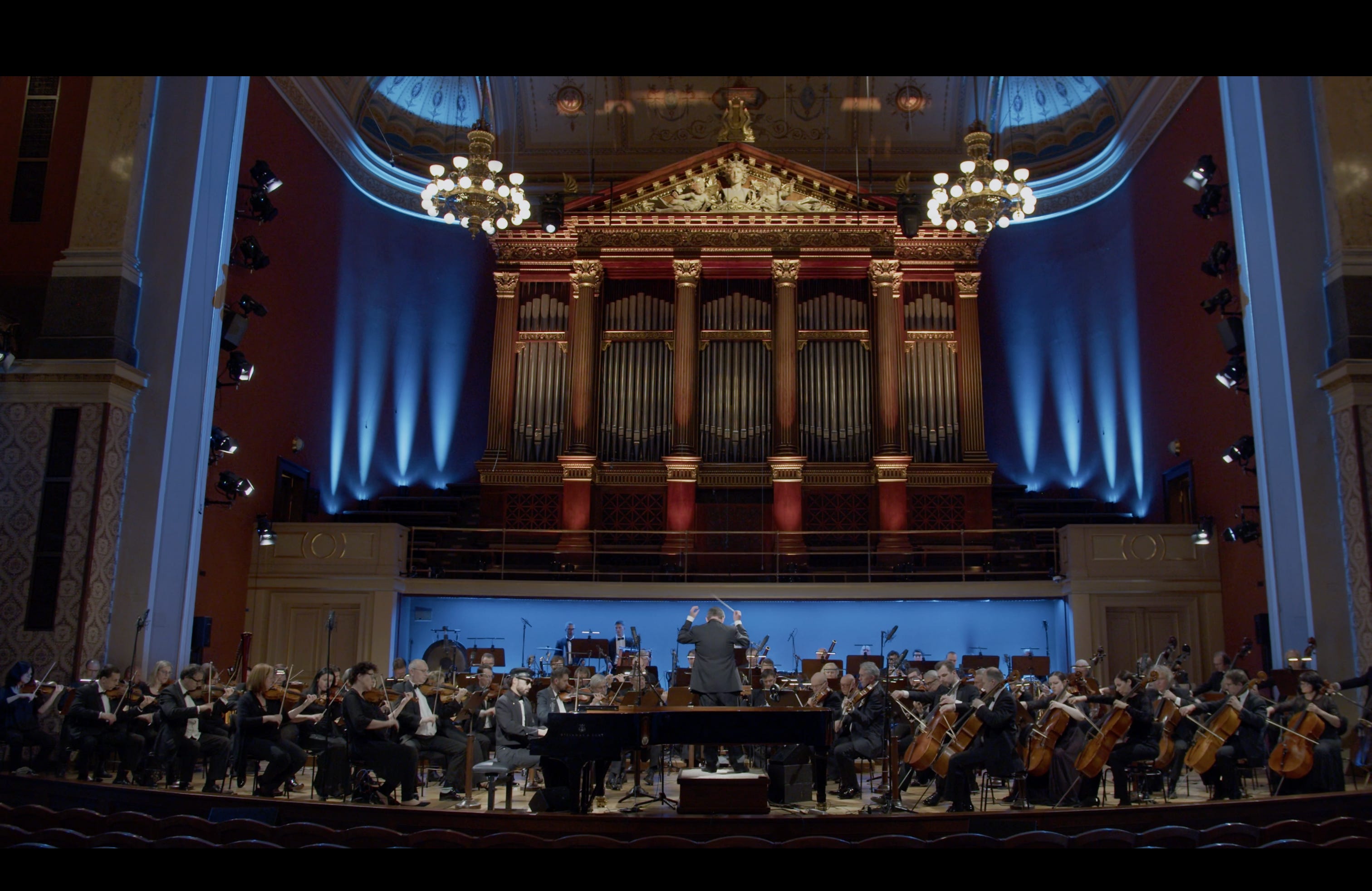
I went to the Rudolfinum in Prague for the first time.
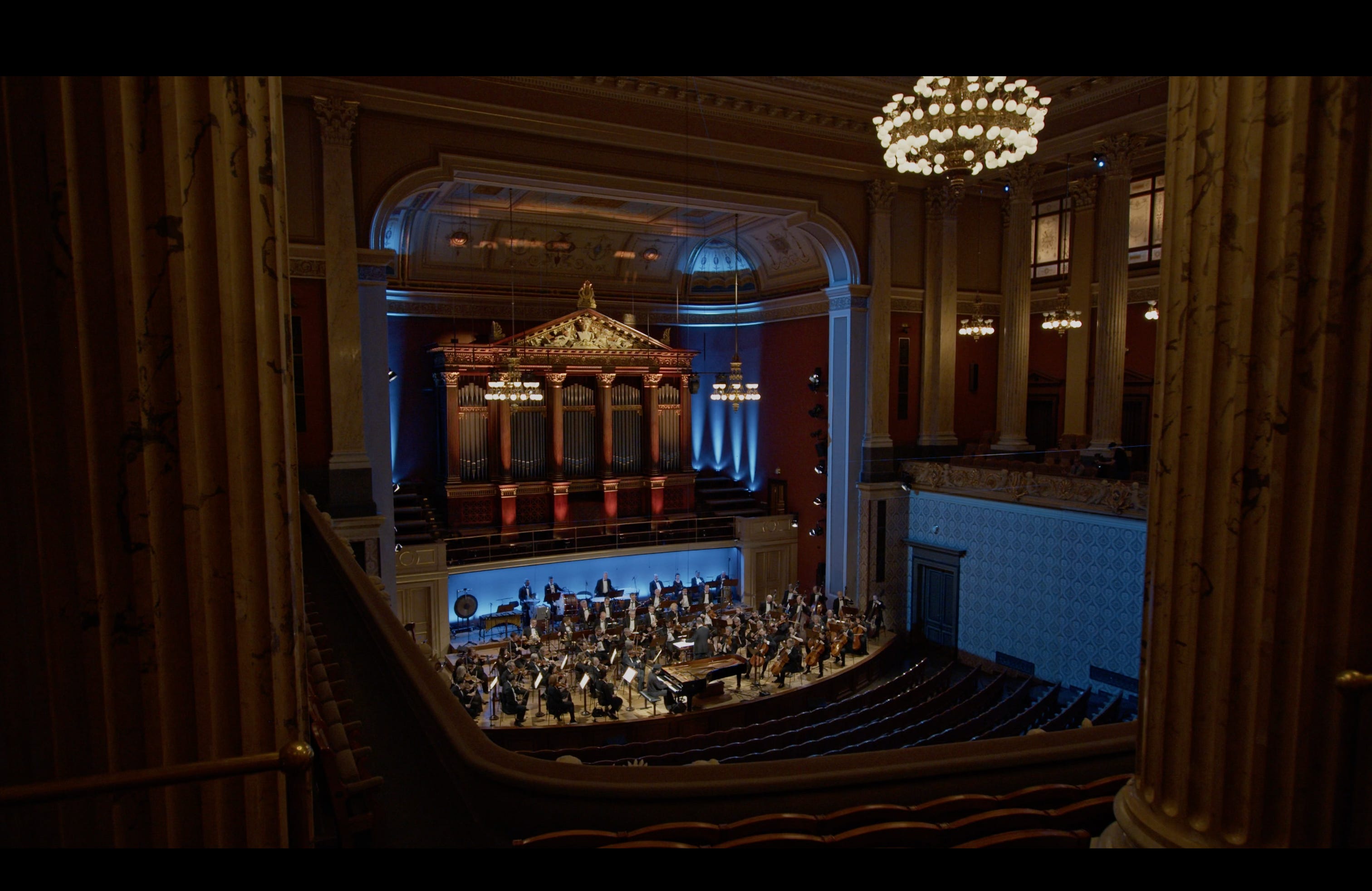
That hall, built at the end of the nineteenth century, is a monument. Woodwork and gold everywhere, a ceiling rising like a cathedral, and an acoustic warmth that feels almost natural.
We set up forty-eight microphones to capture the whole ensemble. Forty-eight listening points, to keep margin in the mix, to translate the room itself, so every section can exist without crushing the others.
When I heard the orchestra play my compositions for the first time, something shifted inside me.
These melodies I had imagined alone suddenly carried a scale I had only dreamed of. The strings breathed. The woodwinds sang. The brass opened the space. And the piano found its place in the middle of it all, surrounded, carried, magnified.
I can think in orchestra now.
This album contains moments where the piano stands alone, as it always has.
And it contains moments where seventy musicians accompany it in conversation. Two worlds, living side by side. Answering each other. Intimacy and immensity. The drop and the ocean.
I feel grateful, because this project asked me to grow. To step outside what I controlled, to explore new colors. To accept that the piano could become the starting point of a wider journey.
Sincerely,
Sofiane Pamart
✨ Lire cette publication en français ici → Piano Scenes (FR)
Great stuff!!